
Czechoslovakian wolfdog: real character and requirements
of reading - words
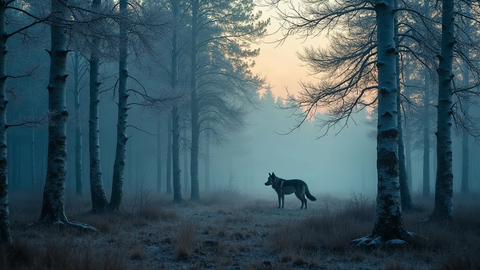
The Czechoslovakian wolfdog exerts an extraordinary fascination. His gray coat, his amber almond-shaped eyes, his appearance of a wild predator: everything about him evokes the wolf. However, the character of the Czechoslovakian wolfdog is much more complex than its appearance suggests, and neither the official breed sheets nor the photos on social networks really prepare you for what it really represents on a daily basis. Here is what you need to understand before committing, or simply to better admire this exceptional breed.
The essential things to remember
- Breed recognized by the FCI in 1989, resulting from a Czechoslovakian military program started in 1955.
- Temperament: loyal to his pack, suspicious of strangers, deeply gregarious.
- Requires an experienced owner, intensive early socialization from 8 weeks of age and at least 2 hours of daily exercise.
- Not recommended for first-time homeowners, homes without outdoor space and people who are away all day.
- Life expectancy: 12 to 16 years.
What makes the Czechoslovakian Wolfdog unique among all breeds
Among wolf enthusiasts, the Czechoslovakian wolfdog occupies a special place. He is not simply a dog that “looks like a wolf”: he is, genetically, a direct descendant. This proximity to the wild predator explains everything about its character, its needs and its paradoxes. For wolf lovers who wish to express this fascination without necessarily adopting this demanding breed, our collection of wolf soft toys and wolf figurines offers an emotional alternative to match.
A military program that changed everything (1955-1989)
In 1955, the Czechoslovak army launched an experimental crossbreeding program between German shepherds and a Carpathian wild wolf named Brita. The stated objective: to create a dog endowed with the physical capabilities of the wolf (exceptional endurance, night vision, resistance to intense cold) combined with the obedience of the German shepherd, for high mountain military missions. It took 34 years and dozens of generations of rigorous selection to stabilize the breed and gain official recognition by the Fédération Cynologique Internationale in 1989. What is less known: military testing ultimately concluded that the CLT was too autonomous and too unpredictable for structured combat missions. The military abandoned the project, leaving passionate civilian breeders to continue the work.
What the wolf's genes transmit that no other breed possesses
Unlike the German Shepherd, selected for centuries for almost unconditional obedience, the Czechoslovakian wolfdog retains a degree of decision-making autonomy directly inherited from the wolf. He evaluates situations, thinks before obeying, tests limits. This is not disobedience: it is a fundamentally different way of operating, rooted in the survival instinct of a wild animal. This nuance changes everything in the educational approach, and many owners discover it too late.
The character traits that define this breed, without filter
Loyal to his pack, indifferent to others
The CLT develops an intense attachment relationship with his immediate family, what he considers to be "his pack". This attachment is real, deep, sometimes exclusive. Outside of this circle, he is naturally distant, sometimes indifferent. Don't expect a dog who happily greets every visitor with enthusiasm: that's just not his nature. His loyalty is selective, and this is precisely what makes him so valuable to those who understand and accept this functioning.
Dangerous or simply suspicious? What breeders say
The question comes up systematically, and the answer deserves to be nuanced. The Czechoslovakian Wolfdog is not aggressive by nature. Its innate wariness, combined with its size, strength and protective instinct, can, however, become problematic in the absence of early socialization and a consistent educational framework. Specialized breeders agree on a fundamental point: a poorly socialized CLT is not dangerous because it is naughty, but because it has not learned to read and accept the codeshuman social. The difference is essential to understanding your real needs.
His gregarious behavior: why he can't stand solitude
The wolf does not live alone. Neither does his domestic descendant. The CLT has a deep need for presence, contact and connection with its peers, whether human or canine. A Czechoslovakian wolfdog left alone for repeated hours can develop distress behaviors: destruction, persistent vocalizations, agitation that is difficult to control. This point is often underestimated by adoption candidates seduced by the romantic image of the lone and independent wolf. The reality is exactly the opposite: it is a profoundly gregarious being who suffers from isolation.
With children, strangers and other animals
Children in the pack: rules and realities
A CLT can coexist harmoniously with children, provided that socialization has been carried out from the first weeks of the puppy's life and that clear rules of life are established in the home. Its size and dynamism make it less suitable for homes with very young children (under 6 years old) when the parents do not have prior canine experience. Supervision of interactions remains essential, not because the dog is intrinsically dangerous, but because its reactions are less predictable than those of a breed with a gentle temperament.
Facing strangers and visitors
With strangers, the CLT naturally adopts a posture of reserve, sometimes of active distance. He is not the type to beg for caresses from anyone who comes along. This distrust is an integral part of his identity and does not constitute a fault in itself. However, it must be supervised from an early age through regular and positive exposure to varied social situations, to prevent it from turning into chronic anxiety or excessive defensiveness towards usual visitors.
Cohabitation with other dogs and animals
The CLT generally enjoys the company of other dogs, especially if socialization has started early. His pack instinct often makes him more balanced and serene in the presence of a fellow animal. With cats and small animals, the predatory instinct remains present and can be expressed suddenly, especially during rapid movements. A gradual, supervised and patient introduction is recommended, with no guarantee of results in all homes.
Character of the CLT compared to the Malinois, Husky and Saarloos: who really demands the most?
| Breed | Daily exercise | Education difficulty | Loneliness tolerance | Family with children | Distrust foreigners |
|---|---|---|---|---|---|
| Czechoslovakian Wolfdog | Very high (2h+) | Very high | Low | With experience | High |
| Malinois Shepherd | Very high (2h+) | High | Low to medium | With supervision | Average |
| Siberian Husky | High (1h30) | Medium to high | Low | Good | Low |
| Saarloos Wolfdog | Very high (2h+) | Very high | Very weak | With experience | Very high |
For those who wish to immerse themselves in this fascinating world without the constraints of demanding breeding, our selection of wolf decorations captures the essence of these wild breeds in your interior.
Raising a Czechoslovakian Wolfdog: What This Breed Really Requires
Socialization from 8 weeks: the window you can't miss
Between 8 and 12 weeks, the CLT puppy goes through a critical socialization window, even more decisive than for most other breeds. The wolf instinct naturally amplifies distrust if this period is not used to expose the puppy to a wide variety of situations (crowds, transport, urban noise), people of all ages and different animals. A CLT puppy well socialized during this window develops a basic confidence that will allow him to navigate the adult world with poise. A puppy who has not been trained may remain anxious, defensive, or unpredictable throughout his life, and no amount of subsequent training will fully compensate for this early deficit.
Why you need a teacher who understands the natural hierarchy
The CLT does not obey out of fear or automatism. He recognizes someone as a “pack leader” and grants him his trust, provided that this status is built on consistency, calm authority and constancy. Coercive methods (physical punishment, restraint, choke collars) systematically aggravate undesirable behavior with this breed: they create distrust and unpredictability where trust should be. Positive reinforcement, anchored in a clear and hierarchical relationship, remains the only approach that works sustainably in the long term.
The living environment he requires to stay in his element
The CLT is not built for apartment living. He can tolerate it if his owner compensates with two hours of intensive physical activity daily, without exception, and provided he is offered regular outings in an open natural environment. The house with a garden remains the minimum recommended configuration. The rural environment or the countryside constitutes his ideal environment, one in which his instincts can express themselves freely and his physiological and behavioral needs can be fully satisfied. A chronically under-stimulated CLT finds its own occupations, rarely compatible with the integrity of your furniture or the tranquility of your neighbors.
Is this breed made for you? Questions to ask yourself before adopting
This breed is suitable for you if you:- Have already had a dog with character and have mastered the basics of dog training- Live in a house with a secure outdoor space- Can devote at least two hours a day to your dog's physical activity- Are present at home most of the day- Seek a relationship based on mutual respect rather than automatic obedience
This breed is not suitable for you if you:- Adopt a dog for the first time without professional support- Live in an apartment without easy access to natural spaces- Have very young children and little dog experience- Must leave your dog alone for more than five hours a day during the week
If you are deeply passionate about the world of wolves but cannot commit to adopting a Czechoslovakian wolfdog, discover our wolf jewelry and our selection of wolf stuffed animals: an authentic way to express this connection with the wolf, without compromising on animal welfare.