
Viking rune: meaning of the 24 runes of the Futhark
of reading - words
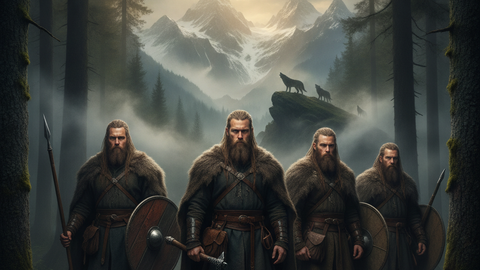
The intriguing Viking rune which comes across an engraved stone on the edge of a Scandinavian fjord. These angular signs defy the centuries, telling a story that began in the 2nd century, transmitted by the Germanic peoples, sublimated by the Vikings and reactivated today in tattoos and jewelry. Legend has it that Odin himself conquered these signs at the cost of extreme sacrifice, hanging for nine days and nine nights on the cosmic tree Yggdrasil. You will discover the complete runic alphabet, the 24 runes of Old Futhark, their meaning and their age-old use. Choosing a Viking rune today means continuing a tradition that the Scandinavians honored on wood, stone and metal.
The essential things to remember
- The Viking runes are the letters of the Scandinavian runic alphabet, attested from the 2nd to the 12th century on stones, wood and metals.
- Their mythological origin comes from the sacrifice of Odin hung for 9 days and 9 nights on the cosmic tree Yggdrasil to conquer runic knowledge.
- The Old Futhark has 24 runes grouped into 3 families of 8 (the Aettir), used from the 2nd to the 8th century before being simplified into the Young Futhark with 16 runes.
- The most powerful runes according to sources are Tiwaz (victory and justice) and Algiz (divine protection).
- Today, Viking runes inspire divination, spiritual tattoos and talisman jewelry worn in everyday life.
The mythological origin of the runes: Odin and Yggdrasil
The sacred origin of the Viking runes is based on the central myth of the sacrifice of Odin, recounted in the Havamal of the Icelandic Codex Regius. To conquer the hidden knowledge of the universe, the father of the Nordic gods inflicts an extreme ordeal on himself and agrees to die symbolically to be reborn as the holder of a new power.
According to stanzas 138 to 141 of the Havamal, Odin hangs himself upside down from a branch of the cosmic tree Yggdrasil. He remained there for 9 days and 9 nights, pierced with his own Gungnir spear, without eating or drinking, suspended above the bottomless abyss. At the end of this voluntary agony, he "seizes" the runes, makes them his own and comes down to transmit them to the gods, elves and men. This founding image places each rune under the seal of a sacrifice, of a conquest through suffering and patience.
The archaeological reality nuances the myth. The first runic inscriptions found date from the 2nd century AD, well before the Viking era, on the Meldorf pendant in Germany and the Vimose fibula in Denmark. Continental Germanic peoples already used them before the Scandinavians inherited them. The mythological origin of Odin therefore covers a real, slow cultural transmission shared between tribes.
Three figures populate this runic geography. Mimir, guardian of the well of wisdom at the foot of Yggdrasil, pays for the knowledge of his eye for Odin. The Nornes (Urd, Verdandi and Skuld) engrave the destiny of men in the wood of the cosmic tree. The rune then becomes the tangible support of a sacred word, a bridge between the invisible and the visible. This symbolic charge explains why, even today, choosing a rune for a pendant or a tattoo is a deeply personal gesture.
Old Futhark and Young Futhark: two alphabets, two eras
The term Viking rune actually covers two distinct alphabets used at different times by the Scandinavian peoples. Knowing this distinction prevents you from confusing the inscriptions and their meanings.
The Old Futhark, also called the Elder Futhark, is the oldest and most complete runic alphabet. It has 24 letters organized into 3 groups of 8 runes called Aettir. Each Aett is named after a deity or theme: the family of Freyr for prosperity, the family of Hagal (or Heimdall) for transformation, the family of Tyr for war and inheritance. Old Futhark was used from the 2nd to the 8th century by continental and Scandinavian Germanic peoples, on everyday objects and memorial stones.
At the end of the 8th century, the Scandinavians simplified it to adapt to the evolution of Old Norse. The Young Futhark will thus be born, or Younger Futhark, reduced to 16 runes. It has two regional variations: the long-branched runes used in Denmark and the short-branched runes preferred in Norway and Sweden. It is this simpler alphabet, quicker to engrave, which covers the majority of Scandinavian runestones from the Viking era.
To compare at a glance:
| Alphabet | Number of runes | Period | Area |
|---|---|---|---|
| Old Futhark | 24 | 2nd to 8th century | Germanic peoples + Scandinavia |
| Young Futhark | 16 | 8th to 12th century | Viking Scandinavia |
| Anglo-Saxon Futhorc | 29 to 33 | 5th to 11th century | Anglo-Saxon England |
The Anglo-Saxon Futhorc, the third variant to know, accompanies the Saxon invasions in England and has up to 33 runes to transcribe the specific sounds of Old English. But it is above all the runes of the Young Futhark which appear on emblematic pieces: the Rok Stone in Sweden with its 760 characters, the longest known runic inscription in the world, and the Jelling Stones in Denmark, erected around 965 by King Harald Blue Tooth to mark the Danish conversion to Christianity.
The 24 runes of Old Futhark: meaning rune by rune
The Old Futhark of 24 runes constitutes the most used reference today in divination and runic jewelry, because it offers exhaustive symbolic coverage unlike the more concise Young Futhark. Here is the complete table, organized in the traditional order of the three Aettir.
| Rune | Name | Phoneme | Keyword | Meaning |
|---|---|---|---|---|
| F | Fehu | F | Livestock, wealth | Prosperity, material abundance, start of cycle |
| U | Uruz | U | Aurochs | Brute strength, vitality, physical health |
| Th | Thurisaz | Th | Giant, thorn | Defense, conflict, strength of Thor |
| A | Ansuz | A | God, Odin | Wisdom, divine communication, inspired word |
| R | Raidho | R | Travel | Movement, path, cosmic order |
| K | Kenaz | K | Torch | Knowledge, creativity, fire of inspiration |
| G | Gebo | G | Donation | Exchange, partnership, reciprocal generosity |
| W | Wunjo | W | Joy | Happiness, community harmony, fullness |
| H | Hagalaz | H | Hail | Rupture, transformative crisis, fertile ordeal |
| N | Nauthiz | N | Need | Constraint, necessary lesson, patience |
| I | Isa | I | Ice | Immobility, waiting, temporary blocking |
| J | Jera | Y | Year, harvest | Cycle, reward for patient efforts |
| Ei | Eihwaz | Ei | If | Endurance, link between worlds, vertical axis |
| P | Perthro | P | Fate, mystery | Hidden destiny, divination, secret gestation |
| Z | Algiz | Z | Momentum, protection | Divine protection, energetic sanctuary |
| S | Sowilo | S | Sun | Victory, success, radiant vital force |
| T | Tiwaz | T | Tyr, god | Justice, honor, victory in battle |
| B | Berkano | B | Birch | Birth, growth, sacred femininity |
| E | Ehwaz | E | Horse | Trust, partnership, common journey |
| M | Mannaz | M | Humanity | Self, identity, community of men |
| L | Laguz | L | Water | Intuition, emotional flow, unconscious |
| Ng | Ingwaz | Ng | Ing, fertility | Creative energy, gestation, accomplishment |
| D | Dagaz | D | Day, dawn | Awakening, breakthrough, new clarity |
| Y | Othala | Y | Heritage | Home, lineage, ancestral heritage |
Certain runes stand out for their strong symbolic charge. Tiwaz, rune of the god Tyr, was engraved on Viking swords before battle to invoke victory and justice. Algiz opens a protective sanctuary around the wearer. Berkano, the birch rune, symbolizes the life that returns after winter and remains the rune of birth throughout the runic tradition. Sowilo brings the solar fire of vital victory, Fehu the prosperity of beginnings.
The logic of the three Aettir structures the whole. The 1st Aett (Freyr) describes the conditions of daily life and abundance. The 2nd Aett (Hagal or Heimdall) goes through trials and transformations. The 3rd Aett (Tyr) crowned by warrior qualities and heritage. You can therefore read the 24 runes as a complete initiatory journey, from material subsistence to ancestral transmission.
How did the Vikings use runes in everyday life?
The Vikings did not reserve runes for sacred ceremonies: they were also used to write short messages, to mark property, to invoke protection or to question destiny. Three major historical uses structure their centuries-old practice.
The first use is routine written communication. The Vikings carved names on combs, inscriptions on wooden sticks, messages on pieces of bone. The archaeological site of the Bryggen quay in Bergen, Norway, yielded more than 670 runic inscriptions on wood in the 20th century, proving that runes were still actively used in the 13th century for commercial transactions, love letters and settlement of disputes.
The second use is memorial and commemorative. The large Scandinavian runestones marked the exploits of chiefs, honorable deaths, religious conversions. Scandinavia today has more than 3000 runestones listed. The Rok Stone in Sweden and the Jelling Stones in Denmark remain the most famous, but hundreds of others dot the fjords and ancient roads.
The third use is magical and divinatory. To engrave a rune on wood or metal was to invoke the force it represented. The gesture was codified and the combinations carefully chosen:
- Bind-runes (ligatures combining 2 to 4 runes) to amplify a specific wish
- Serious talismans for protection (Algiz), love (Gebo), healing (Uruz)
- Divinatory drawing with the throwing of runic wands on a white sheet, method described by the Roman historian Tacitus in his Germania written in the year 98
This third dimension is the one that most inspires modern spirituality. Wearing a rune around your neck or engraving it on wood reactivates a gesture that the Vikings repeated on the banks of the fjords. If you wish to extend this tradition, discover our wolf pendants engraved with Nordic motifs, portable talismans easy to wear every day.
Runes linked to the wolf and Viking animal symbolism
The Viking runic universe cannot be understood without evoking the central place of the wolf, the raven and other totem animals which populated Nordic spirituality. This is the angle which most fascinates fans of Scandinavian mythology and which we explore in depth at Terre des Loups.
The wolf Fenrir, son of Loki and the giantess Angrboda, embodies the warrior destiny and the final apocalypse of Ragnarok. No runes are directly attributed to him in Old Futhark, but berserker warriors and Ulfhednar (literally "wolf skins", fighters clad in wolf fur) carved runes of strength and fury on their weapons to invoke his spirit before battle. Researchers Regis Boyer and Lucien Musset identify the combination Uruz (brute force) and Sowilo (victory) as the most likely association of bind-runes for this warrior context.
Odin himself is accompanied by two wolves, Geri and Freki, whose names mean "Gluttonous" and "Voracious". According to the Grimnismal, they receive all the meat from Odin's table while the god only drinks mead. This presence of the wolf at the height of Scandinavian mythology makes the runes Ansuz (Odin) and Mannaz (humans placed under divine protection) natural choices for those who recognize themselves in this imagination.
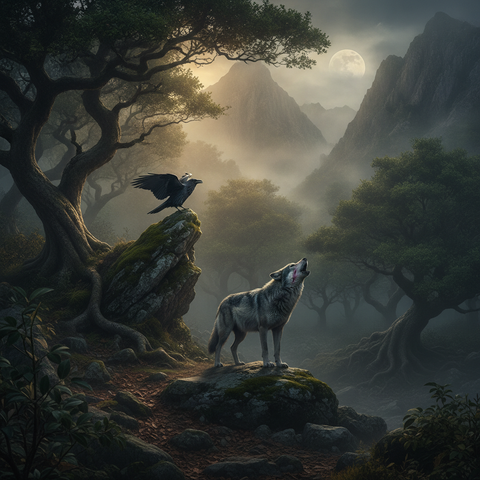
The ravens Hugin and Munin (Thought and Memory) fly over Midgard, the world of men, and bring the news to Odin seated on his throne Hlidskjalf. The runes Ansuz and Raidho (travel) extend this symbolism of knowledge which circulates between worlds.
To wear a fragment of this imagination on a daily basis, you can take inspiration from some traditional combinations:
- To invoke the warrior force of the wolf Fenrir: combine Uruz and Sowilo in a bind-rune
- For protection under Odin's eye: combine Algiz, Ansuz and Mannaz
- For connection to the spiritual journey: wear Raidho and Ehwaz
This logic inspires the entire wolf rings and wolf pendants collection from Terre des Loups, where runic motifs join the iconography of the Nordic wolf.
Tattoos and runic jewelry: wearing a rune every day
Wearing a Viking rune every day on the skin or around the neck continues a thousand-year-old gesture that the Scandinavians have repeated since the time of Old Futhark. A few practical rules help to make the right choice.
For a runic tattoo, threeareas come up most often: the forearm for daily visibility, the back for loose designs, the shoulder blade for discretion. Favor runic calligraphy faithful to the archaeological model (a tattoo artist familiar with inscriptions avoids common pictogram mistakes). Three classic associations:
- Tiwaz on forearm, for justice and victory in important conflicts
- Algiz between the shoulder blades, for daily divine protection
- Bind-rune Uruz + Sowilo on the calf or pectoral, for strength and vital victory
Want to test a pattern before the final tattoo? Our wolf tattoos collection offers Nordic temporary tattoos to validate your choice over several days.
For a runic jewel, the principle of the personal talisman guides the selection. We choose our rune like we choose an amulet, in accordance with a life objective: prosperity with Fehu, love with Gebo, courage with Tiwaz, birth with Berkano. The noble materials (925 silver, stainless steel, bronze) resist time like the original inscriptions on stone. The engraving can be simple (a single rune) or compound (bind-rune of 2 to 3 runes).
Some criteria to check before purchasing:
- Engraving depth sufficient to resist wear
- Hypoallergenic material (925 silver, 316L steel)
- Adjustable cord or chain to adapt the length
Viking runes in the Terre des Loups collection
Our Terre des Loups catalog combines the Viking runic imagination with the symbolism of the Nordic wolf at the heart of our universe. Several categories extend the spirit of Old Futhark in objects that you wear or display in your home.
The wolf runic jewelry brings together rings, pendants, bracelets and necklaces where the runic engravings accompany the wolf motifs. You will find both traditional bind-runes and contemporary creations inspired by Scandinavian mythology. Discover the wolf rings collection for knights and rings marrying Tiwaz, Algiz or Fehu with the wolf totem.
Cote clothing, sweatshirts and t-shirts often feature Futhark motifs against a background of Nordic scenes (Yggdrasil tree, longship, wolf shadow). Textile allows a larger statement than jewelry and remains wearable on a daily basis.
For decoration, our runic paintings, Nordic dream catchers, stickers and wallpaper transform a room into a mystical sanctuary. The wolf dream catcher collection extends the Scandinavian spiritual universe into the bedroom or living room.
The spirit remains the same everywhere: wearing or displaying a rune is not a fashion effect, it is opening a silent dialogue with a thousand-year-old tradition that the Vikings honored on wood, stone and metal.
Viking Runes FAQ: 4 essential questions
What are the 24 Viking runes?
The 24 runes of Old Futhark are, in traditional order, Fehu, Uruz, Thurisaz, Ansuz, Raidho, Kenaz, Gebo, Wunjo (1st Aett of Freyr), Hagalaz, Nauthiz, Isa, Jera, Eihwaz, Perthro, Algiz, Sowilo (2nd Aett of Hagal or Heimdall), Tiwaz, Berkano, Ehwaz, Mannaz, Laguz, Ingwaz, Dagaz, Othala (3rd Aett of Tyre). The Young Futhark, used by the Vikings from the 8th to the 12th century, only has 16 runes after a simplification linked to the evolution of Old Norse. The emblematic Scandinavian runic inscriptions (Rok stone, Jelling stones) mainly use the Young Futhark.
What is the most powerful Viking rune?
Two runes compete for this title according to sources. Tiwaz, rune of the god Tyr, symbolizes justice, honor and victory in battle. It was engraved on Viking swords before battles to invoke the divine protection of the warrior god. Algiz, rune of momentum and sacred protection, opens an energetic sanctuary around the wearer. Modern sources (Lars Magnar Enoksen, Regis Boyer) often add Sowilo (sun and vital victory) to the ranking of the most powerful. The final choice depends on your intention: Tiwaz for victory, Algiz for lasting protection, Sowilo for radiant life force.
What is the principle of runes?
The principle of Viking runes is based on 3 complementary dimensions. On a linguistic level, these are alphabetic letters (Futhark) which transcribe the ancient Germanic and North Germanic languages. On a magical level, each rune embodies a cosmic force or archetypal quality that can be invoked through engraving and wearing. On the divinatory level, the runes are drawn by lot (throwing of wands or engraved stones) and interpreted according to their meaning and their position in the drawing. The three dimensions coexisted in historical Viking practice, as evidenced by the short (ritual) and long (memorial) inscriptions found in Scandinavia.
What is the Viking rune of life?
The Viking rune traditionally associated with life is Berkano, symbol of the birch tree. Berkano represents birth, growth, spring renewal and the creative feminine principle. The birch is one of the first trees to green up in spring in Scandinavia, making it a natural symbol of life returning after winter. Other runes are linked to vitality: Ingwaz (creative energy, gestation), Dagaz (awakening and new dawn), Sowilo (radiant vital force). But it is Berkano which remains the most accurate answer to "Viking rune of life" in the modern runological tradition.